The Neuroscience Behind Psychedelics with Top Neuroscientist Professor Robin Carhart-Harris
Leading neuroscientist Professor Robin Carhart-Harris takes us on an enlightening journey into the world of psychedelics and their effects on the brain. Discover how such drugs activate serotonin receptors–leading to profound changes in perception and consciousness–along with their long-term effects on the brain's structure and function and potential to enhance brain plasticity.
This talk was recorded at Summit At Sea in May 2023.
About the Presenter
Dr. Robin Carhart-Harris, PROF. OF NEUROLOGY & PSYCHIATRY, UCSF; DIRECTOR OF PSYCHEDELIC DIVISION, NEUROSCAPE
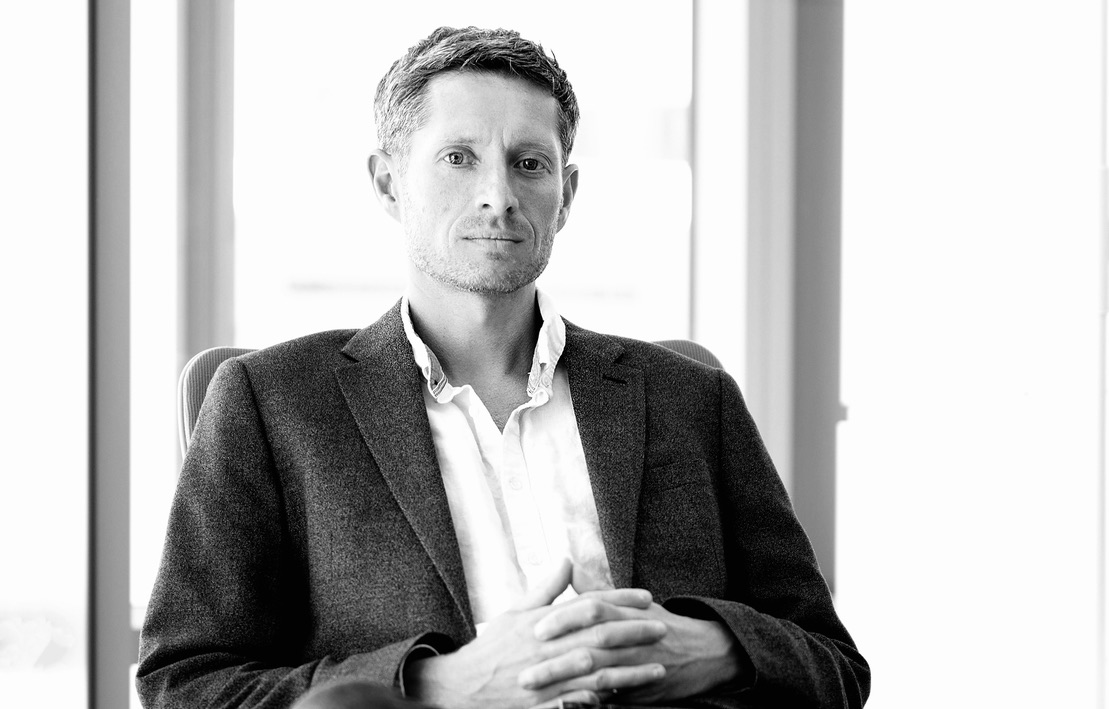
One of the leading scientists studying the effect of psilocybin on the brain.
Transcript
Welcome to the stage co-founder of Flourish Trust and chairwoman of the board of Unreasonable Group, Christiana Musk.
[applause]
Good morning, Summit. We have our early birds here. So, my fellow enthusiasts of the human mind, I am so excited to introduce to you a true luminary in the field of neuroscience. Before I introduce our speaker of the day, I would love a show of hands: how many of you have ever heard about psychedelics and wondered, "How do these compounds actually work?" Oh, good, good. Because our speaker today is going to help us think through and understand this.
We are fortunate that our speaker today has applied his genius to asking those questions, to help us better understand the neuroscience of psychedelic medicine. As a preeminent figure in the realm of human consciousness and brain research, Professor Carhart-Harris has devoted his career to unraveling the mysteries of the human mind. With unyielding curiosity and a profound dedication to scientific inquiry, he has embarked on groundbreaking studies that have revolutionized our understanding of the human brain and its intricate workings.
He is head of the Centre for Psychedelic Research at Imperial College London and director of the Psychedelics Division at the University of California, San Francisco. Through his pioneering research, he's explored the realms of altered states of consciousness, shining a light on the profound effects of various substances on our cognitive processes and perception. His work has expanded our understanding of the neural mechanisms that underpin these altered states, opening doors to new avenues of exploration and potential therapeutic applications, including for depression, anorexia, and chronic pain.
With an extraordinary blend of scientific rigor, intellectual acuity, and deep compassion, Professor Carhart-Harris has earned global recognition for his groundbreaking research on psychedelics. His contributions have not only transformed our understanding of these substances but have also paved the way for new approaches to mental health and well-being. His work has kindled hope for millions of individuals worldwide who seek relief from the many burdens of mental health conditions. So let us give a big Summit round of applause for Professor Robin Carhart-Harris.
[applause]
Wow. Well, thank you for that incredible introduction, Christiana. It's really, really nice. It would have been very hard to have done that better. But yes, thanks so much for coming to this talk at such an early hour. We're going to have a great time, I think. You're going to learn some things, I hope, and it's going to be fun. I've done a few of these before and I get goosebumps every time, so I hope you will too.
So I'm going to share my screen now and we're going to get right into it. But what I will say just before I get going is that this is really a major thing that's happening at the moment, what we're going to talk about today. I call it the Psychedelic Renaissance, and I genuinely believe that it's a massive thing in the history of humankind. I really do. It might sound a bit silly to say that, but I'm going to hopefully share with you why I feel that way.
So my favorite talk title is "The Neuroscience of Psychedelics." I've called it something slightly different, but really that's what the talk is, and you get to learn some really cool things about the brain and the mind, and I'm hoping you'll be fascinated like I am.
So I'm the leader of one of two psychedelic research centers in the world — that's the one in London — and then I moved to San Francisco a couple of years ago and established the second one there. So I'm doing clinical work as well as basic neuroscience, and studying healthy people. You can see some of the work has been published in high-impact scientific journals and a lot of people take interest in this. This is the team in San Francisco.
And just to say that none of it really would happen without the generosity of philanthropists, who are essentially the investors, but they don't get a financial return — they just feel good that they've helped make important things happen. And a special mention again to Christiana Musk, who's been one of the most outstanding philanthropists in our field. So on that note, let me get going. Thank you so much.
So we published a paper, I guess about 14 years ago now, where we did the first brain imaging study of a classic psychedelic. We used intravenous psilocybin — you might have heard of psilocybin, it's sometimes called "magic mushrooms"; it's the principal psychoactive compound in magic mushrooms — and we gave it by IV. We had people lying inside a brain scanner, and we basically looked at what happened to the brain activity. We were the first to do this.
And I have to tell you about what we found, because it really surprised us and it set us on a path, I think, to a more general and really important understanding. We expected to see brains become more active on the psychedelic, and in fact we saw something quite different. What we really saw were some key hub centers — this network that I'll explain in a second — decreasing in their activity, like becoming quieter. And how did that make any sense? I mean, this is a drug that completely changes someone's conscious experience in profound ways that we're going to get into. How the hell did that happen with less brain activity? What is going on?
Well, here's just one brain scan image. In the left you can see someone's brain at rest, just lying inside the scanner, not having taken anything. You can see the yellow and orange colors — that's brain activity. These are the brain at work. You see them in the middle of the brain in particular, in the left image. And then something remarkable happens under the psychedelic — all of that activity in the middle of the brain quiets down. So you can see the absence of that warm color in the right-hand side image. And this is really, I would say, a hallmark finding of the neuroscience of psychedelics: a decrease in a certain kind of activity, a decrease in the constraint that is normally held on the mind by the brain. And what happens when you release the mind in that way? Well, a whole lot of stuff happens, and I'll get into it.
This is the network that decreases in activity. It's known as the default mode network — maybe you've heard of it. It's known by some as the "ego network," and I'll explain why. It's a network that relates to the self, to one's sense of self — the self as a construct. In a healthy individual, this network functions well, but in someone with depression, it becomes overactive. So I'm jumping ahead just to flag up why this might matter for the treatment of depression.
So why is the default mode network also known as the ego network? Well, this is what it does: it's involved in one's sense of self, thinking about oneself, thinking about other people and what they think about you, thinking about the past, thinking about the future, and then something that I call mental time travel — which is where you can float above all of these things and do metacognition, think about thinking. You might think, "Well, what's the big deal with that?" Well, a lot of animals can't do that. You've got to have a highly evolved brain. And this is what the default mode network in large part does. So you might call it the ego network.
Here's a visualization of a brain on psilocybin. And you can see how connected the brain is compared with normal placebo on the left. What you can see just from looking at it is how much more interconnected the brain is under psilocybin. It's really as if the brain goes into this state of hyperconnectivity — things talk to each other that don't normally talk to each other. And that has psychological implications that I'll get into now.
So what's happening psychologically? I just want to run through some of the subjective effects of psychedelics in the shortest and most succinct way that I can. Some of the things that happen: visual phenomena — you can close your eyes and see vivid imagery of all kinds. Often with eyes open, it feels a bit like a more colorful, animated kind of experience.
Very emotional. Very, very emotional, in fact. Actually, really on the inside more than on the outside. Some of the therapy can be incredibly emotional. It's almost like the doors come off some of the emotions that are typically kept repressed in someone who's depressed, and they come out. They get what's sometimes called emotional release of these repressed emotions. And sometimes the emotions aren't what you'd think they'd be. You'd think someone who's depressed is going to become more sad or more depressed, but sometimes the emotion is actually the one that you don't necessarily expect — and that's the one that had been kept back. It becomes more accessible, and there's a real value to that cathartic effect. So this is all very relevant to psychedelic therapy.
A strong sense of connectedness — this comes up again and again and again. People feel more connected to others in their lives and humanity more broadly, and also to nature, to the living world. I get this all the time in our clinical work. There might be an emphasis on relationships that the person has in their life, and often that's what they pick up on in the psychedelic experience.
And then you get some more exotic spiritual and/or mystical-type experiences: profound feelings of reverence, or wonder, or awe. The feeling that you've been let into some kind of secret or profound insight — that's sometimes called a noetic experience. And even experiences that relate to a sense of oneness or unity, a loss of boundaries between the self and other, the self and the world, a feeling that everything is one or that everything is connected. These things have a remarkable quality to them, and in fact they are some of the best predictors of therapeutic outcomes. The more of those types of experiences you have, the greater the therapeutic benefit that the individual reports afterward. So these are really meaningful things.
Probably my favorite effect of a psychedelic, and the most relevant to therapy, is increased psychological flexibility. So we're all familiar with this idea of being stuck in a rut. Maybe that's happened to you, or maybe you know someone who's been stuck in a rut — maybe a period of feeling depressed or anxious, or someone with an addiction who's struggling to break a pattern of behavior. And what psychedelics seem to do is shake someone out of that rut and increase their flexibility — which is to say, their ability to change. And I really think that is the essence of the therapeutic action of psychedelics: it helps someone change who is stuck.
We did one of the earliest studies — the world's first clinical trial of psilocybin for treatment-resistant depression. People who had been depressed for a very long time, had tried an average of about four different kinds of treatment, and nothing had helped. We gave them psilocybin in a therapeutic context, and the results were remarkable. That pretty much set us on a path to do more studies and get more and more ambitious, and the studies started to look cleaner and more rigorous.
That process led us to publishing a landmark paper in the New England Journal of Medicine in 2022, where we compared psilocybin therapy with a leading SSRI antidepressant medication. Psilocybin did really well — pretty much as well as the SSRI for the primary outcome. But then on secondary outcomes — some of these extra important measures around connectedness, psychological flexibility, the sense of well-being, feeling emotions again in a good way — psilocybin beat the SSRI quite clearly on every one of those secondary outcome measures.
This is important because it suggests that psilocybin therapy works differently. There's a different quality to how the individual feels afterward, and these are things that relate to the richness of one's life, if you like. It's not just a superficial effect on symptoms, but something more fundamental, I would say, that relates to one's outlook, one's feeling of being connected in the world, and feeling able to actually do something differently in life. And I think that's the special thing about psilocybin therapy.
This is an image that summarizes how I think about psychedelic therapy and the brain science of it. So you can see at the top a depressed person who's been stuck in a rut for a long time — their brain is also kind of stuck in a rut. It's in a certain pattern and it can't get out of it. And what happens with psilocybin is it disrupts all of that. It shakes the snow globe, if you like. You might think of it as a bit like having your hard drive defragmented, or rebooting after a crash.
And what follows is a period of brain plasticity — and this is really important, recent neuroscience. This idea that psychedelics increase neuroplasticity, the ability of the brain to change itself. And this isn't just a psychological phenomenon — it's biological. We can see it in the neurons growing. There are actually new connections being made, new branches being grown. And this is remarkable, and it's been seen now in several important studies.
What I would say is that when you combine this biological plasticity with the psychotherapy — with the guidance — it's really the combination of these things that makes this therapy so powerful. What's really important, and what I want to stress, is that the context matters so much. It's not just about the drug. There's a lot of excitement about the molecule and about the pharmacology, but it's really the combination that matters so much.
I'll just briefly talk about this as it relates to some of our work at UCSF. One of the most powerful and, I think, therapeutic things that happens during a psychedelic experience relates to what you might call revisiting emotional memories. Think of a memory from your past that's associated with a lot of emotion. You might have various defenses that keep you away from truly confronting that and connecting with it. What can happen in the psychedelic experience is that those defenses come down, and you can re-experience these emotional memories with new resources and with a different perspective. And quite often, this leads to what feels like psychological healing.
This is really what seems to happen. If someone has been maybe traumatized and they have a traumatic memory that they can't touch because it's too painful, the psychedelic experience seems to make the mind more willing and able to go there. And when it does, the individual can process it in a new way, and that can be incredibly healing.
Let me just talk briefly about some of the more exotic experiences, because I think this is fascinating. I shared with you some of the more mystical or spiritual aspects of the psychedelic experience, and we see these reliably in our studies. We see people having what they would describe as the most meaningful experience of their life. These are healthy volunteers, no clinical diagnosis. Someone will take psilocybin and say it was one of the top five most meaningful experiences of their life. They'll rank it up there with the birth of their child or the death of a parent in terms of personal significance. That is remarkable, and it tells you something about what these compounds can do.
So let me just close with some thoughts about where the field is going. I think we're looking at FDA approval of psilocybin therapy for treatment-resistant depression, probably within a few years. There are large phase-three clinical trials ongoing, and the evidence is looking really very promising. And I think when this happens, it will be a watershed moment — not just for mental health care, but for how our society relates to consciousness itself.
What I mean by that is that these substances have been so stigmatized for so long, and the story of their prohibition really is one of the great tragedies of modern science, I think. And so there's something incredibly satisfying about seeing the science done properly and seeing the potential realized. And I believe we're in a moment of Renaissance.
Actually, let me just say one more thing. I realize I should talk about the mechanism just a little bit more, because it's so cool. So psilocybin is converted to psilocin in the body, and psilocin acts on the serotonin 2A receptor. This receptor is found on the cells of the cortex, especially the higher-order cortical regions. And what happens when you stimulate this receptor is that you get a massive increase in entropy in the brain.
Now, entropy is a physics term that refers to disorder or randomness. And what we see with psychedelics is that the brain becomes more random, more entropic. And this is related to this idea of shaking the snow globe. Normally, the brain is in a certain pattern which has low entropy relative to what it could be, and the psychedelic just opens up the space of possible brain states. I find that absolutely fascinating, because it relates to deep questions in physics and consciousness research. I call this the Entropic Brain Hypothesis, and it's been my life's work to develop this model. I really do believe it's one of the most important contributions that I and our team have made.
So with that, let's open for questions, because I'm getting excited and I could talk forever. Thank you, and let's have some fun with the Q&A.
[applause]
So I think the first question is about microdosing, and this is a very popular topic. A lot of people in Silicon Valley and elsewhere have been microdosing with psychedelics — taking very small doses that are sub-perceptual, so you don't really feel much — and the claim is that it enhances creativity, productivity, well-being, and so on. I have to be honest: the scientific evidence for microdosing is not very strong at the moment. It's pretty ambiguous. In our own work, we focused on the macro-dose experience, the full-blown experience, where the real heavy lifting seems to happen in terms of therapeutic benefit. And I think there are reasons to believe that the profound experience, the full mystical-type experience, is really where the most significant change happens. So I'm not dismissing microdosing entirely, but I would say the evidence isn't there yet in the way that it is for the full-dose experience.
Someone's asking about bad trips, and this is really important. The idea of having a terrifying experience on a psychedelic is a real concern, and it's one of the reasons why the therapeutic context matters so much. In our clinical trials, we prepare people very carefully. We have trained therapists present throughout the experience. We have a comfortable, safe environment.
What we tell people is that the challenging moments that come up during the psychedelic experience are often the most therapeutically valuable. It's the moments where you face something difficult that you've been avoiding that can lead to the biggest breakthroughs. And what we say is: trust, surrender, and let go. Don't fight what's happening. Lean into it. And the therapists are there to support you through those difficult moments.
When you do that, the so-called bad trip often transforms into something really meaningful and healing. So we don't really like the term "bad trip." We prefer to say "challenging experience," because it's often from those challenges that the greatest growth comes. And the data support this — the studies show that people who have challenging experiences in a supported context often have better therapeutic outcomes than those who had a smooth, easy ride, because they've actually done some work. They've confronted something and processed it. So that's a really important point.
Someone's asking about the difference between different psychedelics, and this is a great question. There are several classic psychedelics: psilocybin, which we've mainly talked about; LSD; DMT, which is the active compound in ayahuasca; and mescaline, which comes from the peyote cactus. And there are also newer synthetic ones like 5-MeO-DMT. They all work on the same primary receptor, the serotonin 2A receptor, but they have different profiles, different durations, and somewhat different subjective qualities.
Psilocybin lasts about four to six hours. LSD can last 8 to 12 hours. DMT in its smoked form lasts only about 15 to 20 minutes but is incredibly intense. Ayahuasca, which contains DMT but is taken orally with an enzyme inhibitor, lasts about four to six hours and has a very different character to it.
And then MDMA is sometimes grouped with psychedelics, but it's technically an empathogen or entactogen. It works on different receptors, primarily on the serotonin transporter, increasing serotonin release. It has a very different quality — much more about love and connection and empathy, and less about the perceptual and mystical effects of the classic psychedelics. MDMA has been studied extensively for PTSD treatment with very promising results. So these are all different tools in what I would hope will become a therapeutic toolkit, each one suited to different conditions and different individuals.
Someone's asking about the long-term effects, and this is really important. What we see in our studies is that the therapeutic benefits of psilocybin can last a very long time. A single or two-dose session of psilocybin with therapy can produce benefits that last months, and in some cases years. This is really quite different from conventional psychiatric medication, which you typically have to take every day, and when you stop taking it, the symptoms often come back.
Whereas with psilocybin therapy, the effects seem to be much more enduring. And I think this relates to the mechanism. It's not just numbing symptoms — it's actually changing the brain in a structural way and changing the person's psychology in a fundamental way. So they have new insights, new perspectives, new ways of relating to their problems, and these things persist. I think that's one of the most exciting aspects of this work: the idea that you can have an experience that fundamentally changes your brain and your mind in a lasting way. That's pretty remarkable.
Someone asks about risks and contraindications, and this is really important to address. Psychedelics are not for everyone. There are certain individuals who should not take psychedelics. People with a personal or family history of psychotic disorders like schizophrenia should avoid psychedelics, because there is a risk of triggering a psychotic episode. People who are taking certain medications, particularly lithium, should not take psychedelics because of the risk of seizures.
And then there are psychological risks. Even in a supported therapeutic context, some people can have very difficult experiences. And while we've talked about how these can be therapeutically valuable, in some cases they can be destabilizing. So careful screening, careful preparation, and careful follow-up integration support are all really critical. This is why I'm a strong advocate for the medical model — for having this done in a clinical setting with trained professionals, rather than just having people doing it on their own without support.
So I think the key message is that these are powerful tools. They can be incredibly beneficial, but they need to be used wisely and responsibly, and with proper support.
Thank you so much for all these wonderful questions. I've had a fantastic time, and I hope you've learned something about the incredible neuroscience of psychedelics and the potential that they hold for mental health care and beyond. Thank you.
[applause]